Last updated November 20, 2026
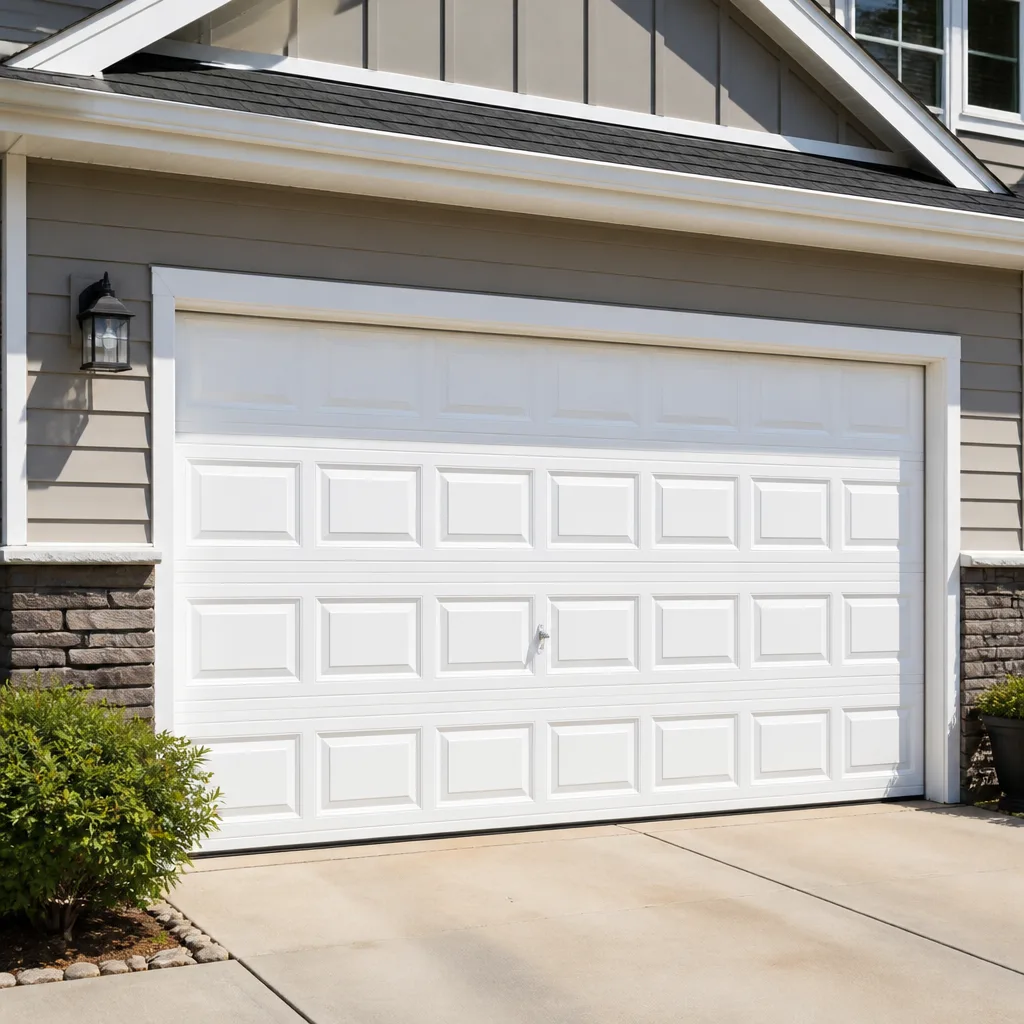 Raised-panel steel
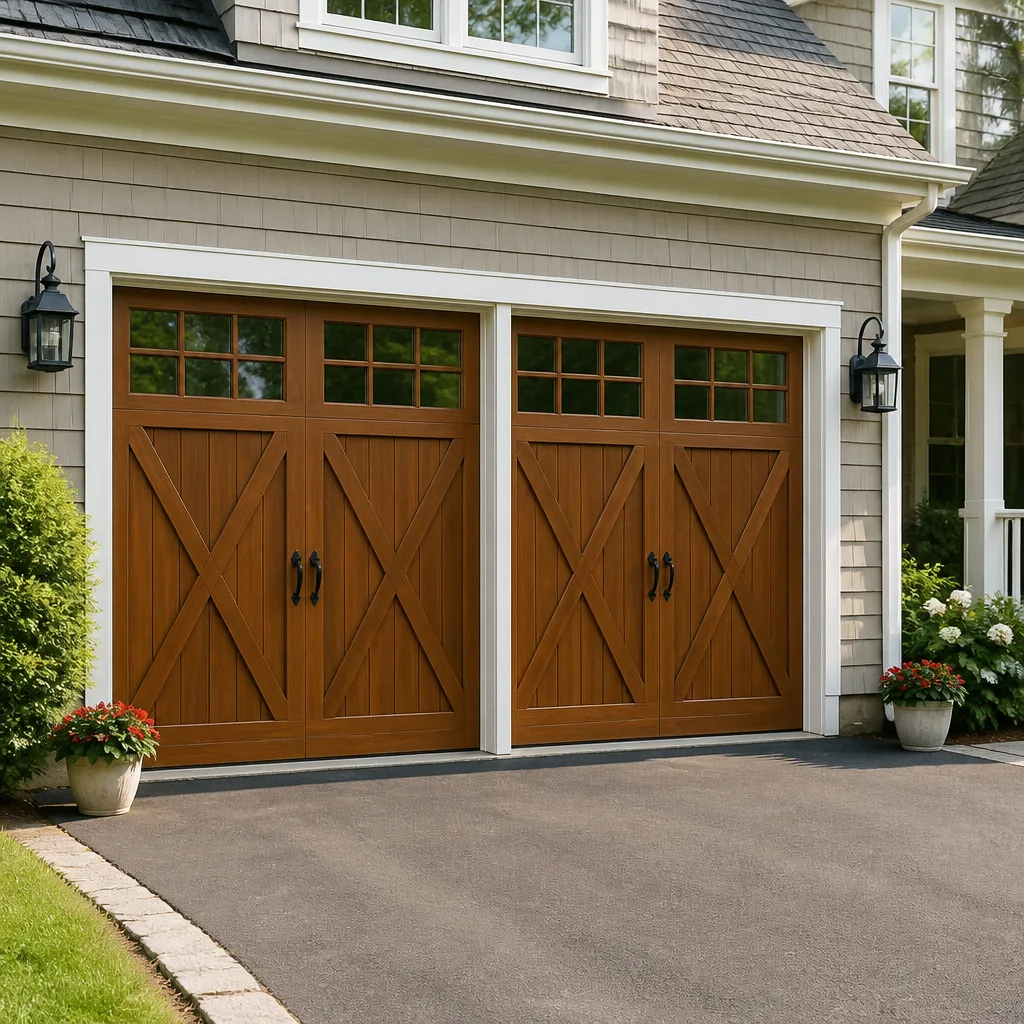 Carriage house
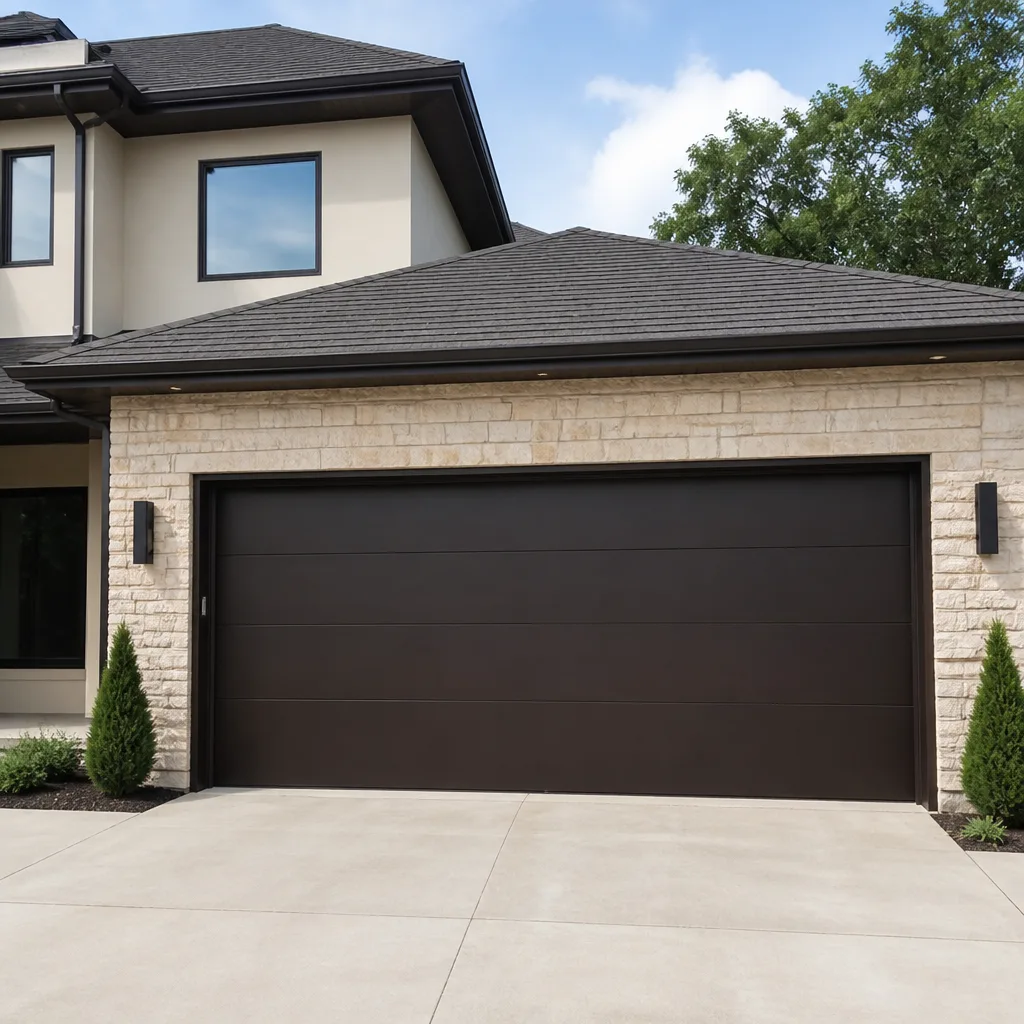 Modern flush
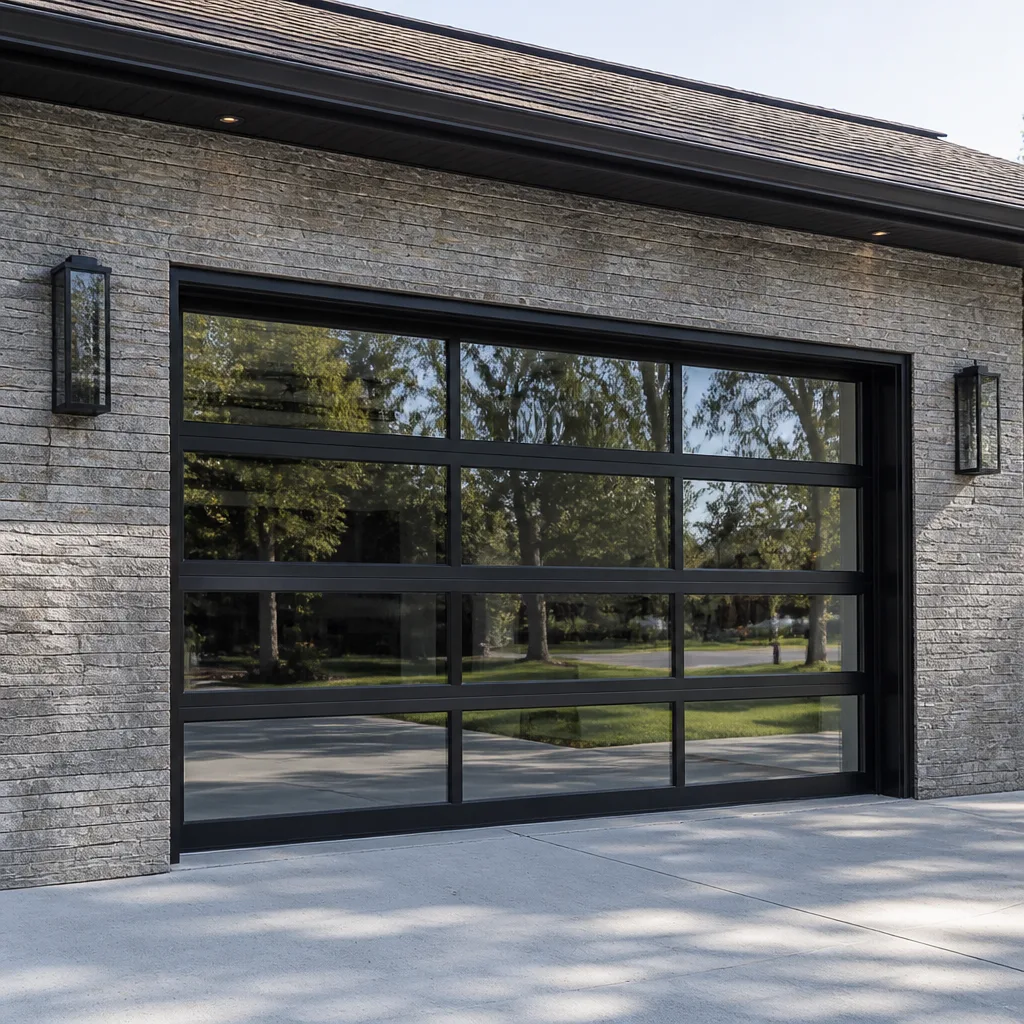 Full-view glass
 LiftMaster openers
 Chamberlain openers
Full 25-point door and opener safety check with every visit - springs, cables, rollers, tracks, and your LiftMaster or Chamberlain opener included
You get a price before we start. It does not change when the pro arrives.
Get your free estimateSeasonal Garage Door Care for Mechanicsville: Year-Round Homeowner’s Guide
The spring that breaks in January usually didn’t fail because of the cold. Ask anyone who works on torsion systems and they’ll tell you the same thing: the damage started months earlier, when summer humidity swelled the door panels, shifted the balance point, and ran the spring at higher tension than it was designed to carry. Then the first hard freeze finished the job. That’s the part most maintenance advice gets wrong. Garage doors don’t break by season. They break by sequence. This guide maps the mechanical calendar to the Virginia weather calendar, so you know what to check in Mechanicsville and when, before the failure finds you.
Quick Answer
Garage door maintenance in Mechanicsville follows four stress phases, not two. Spring freeze-thaw movement shifts frames out of plumb, summer humidity overloads openers, fall is the highest-value window for tuning and lubrication, and winter cold thickens grease and stresses springs. The single most useful habit is a reminder set by door age and cycle count, checked in fall and tuned in spring. Call (855) 600-1041 for a free estimate if anything on the list looks off.
Styles & brands we work with
- Raised-panel steel
- Carriage house
- Modern flush
- Full-view glass
- LiftMaster openers
- Chamberlain openers
Table of Contents
- Why Garage Doors Fail in Phases, Not Seasons
- Spring (March-May): Freeze-Thaw Movement and Out-of-Plumb Frames
- Summer (June-August): Humidity, Panel Expansion, and Opener Overload
- Fall (September-November): The Highest-ROI Maintenance Window
- Winter (December-February): Cold Grease, Stiff Springs, and Wet Logic Boards
- How to Set Your Maintenance Cadence
- What to Check Yourself and What to Leave Alone
- Common Mistakes to Avoid
- When to Call a Professional
- Frequently Asked Questions
Why Garage Doors Fail in Phases, Not Seasons
Most seasonal garage door advice treats the year as two halves: winter prep and summer check. That model comes from colder climates with long, stable freezes. Mechanicsville doesn’t work that way. Central Virginia cycles through freeze-thaw repeatedly across late winter and early spring, then swings into humid summers that push wood and composite panels to their expansion limit. Each phase leaves the door in a slightly different mechanical state than the one before it.
That’s why a failure in February often traces back to August. The spring doesn’t care what month it is. It cares how many cycles it has run and how much tension it carried while doing them. When summer humidity increases panel weight or thickness, the balance point moves. The spring and opener absorb the difference every single cycle. By the time cold weather stiffens the grease and contracts the metal, a system that was already running over-tension has very little margin left.
The practical takeaway: maintenance is cumulative, and the order matters more than the calendar label. A door tuned in September enters winter with room to spare. A door ignored until December enters winter already behind.
The four phases at a glance
- Spring: soil movement and frame shift. Watch for binding and uneven gaps.
- Summer: panel expansion and added resistance. Watch the opener’s effort.
- Fall: the tuning window. Balance, lubrication, hardware torque.
- Winter: cold grease, contracted springs, drainage and moisture.
Spring (March-May): Freeze-Thaw Movement and Out-of-Plumb Frames
Spring in Mechanicsville brings the ground heaving and settling, and garage door frames move with it. A frame that shifts even slightly out of plumb changes the geometry the door tracks against. The door starts to bind, the panels don’t seat evenly, and the opener and spring quietly compensate. This is the phase where small misalignments become expensive.
You can catch most of it with a few measurements, done the same way each time so you can compare year to year.
- Measure the side gaps. With the door closed, check the gap between each side of the door and the frame at the top, middle, and bottom. Write the six numbers down. Gaps that were even last year and aren’t now mean the frame has moved.
- Check the header for level. A 4-foot level across the top of the opening tells you whether the header has tilted. Note the reading rather than eyeballing it.
- Listen for binding. Run the door and listen at the point where it hesitates or scrapes. Binding at the same height every time usually points to track or frame shift, not the opener.
- Check the track for plumb. The vertical tracks should sit parallel to each other. A gap that widens toward the top is a frame issue; a track that’s been knocked inward is a track issue.
- Watch the door’s travel. A door that drifts to one side as it rises is telling you the frame or tracks are out of alignment.
Spring is also the right time to look at the bottom seal and weatherstripping. Winter grit and frost chew at the seal, and a torn seal lets water and pests in all summer. If your door is a Clopay or Amarr steel model, the bottom astragal is a straightforward replacement and worth doing before the wet season.
If any of these checks show movement, it’s worth having the door looked at before summer. Frame and track alignment problems are far cheaper to correct early than after a season of the opener fighting them. That’s basic garage door repair territory, and it’s the kind of thing we check on every visit.
Summer (June-August): Humidity, Panel Expansion, and Opener Overload
Virginia summer humidity does something specific to garage doors: it makes them heavier. Wood panels swell, composite panels expand, and steel doors with wood or composite cores gain resistance at the hinges and rollers. The door still opens. It just takes more effort to do it, and that effort lands on the opener and the spring.
An opener rated for a standard door can usually handle a modest increase in resistance. What it can’t handle is a season of it layered on top of a door that was already near the edge of its balance range. That’s where the failures cluster in late summer: stripped gears, overheating motors, and openers that reverse for no obvious reason.
What to watch in summer
- Disconnect and lift the door by hand. With the opener released, the door should lift with steady, even effort. If it feels heavy or binds, the balance is off and the opener has been covering for it.
- Listen to the opener under load. A motor that sounds strained at the start of the lift is working harder than it should.
- Check the hinges and rollers. Swollen panels put more pressure on hinges. Look for cracked hinge plates and rollers that have worn flat on one side.
- Look at the panel seams. Gaps that close up in summer and open in winter are normal expansion. Panels that bow or rub against each other are not.
- Watch for opener reversal. A door that goes down and comes back up on its own may be reading resistance from a binding panel rather than an obstruction.
If your opener is a Chamberlain or Genie unit, summer is when brand-specific diagnostics matter. These systems have their own force-limit and travel settings, and a generic adjustment can mask a mechanical problem instead of fixing it. When a door is genuinely out of balance, the right answer is usually to correct the balance, not to raise the opener’s force limit. Loosening that setting to make a heavy door move is how openers get destroyed.
Summer is also when smart and Wi-Fi-enabled openers tend to throw nuisance alerts. Most of the time it’s the same root cause: extra resistance on the door triggering the safety circuit. garage door opener repair on these systems starts with the door, not the app.
Fall (September-November): The Highest-ROI Maintenance Window
Fall is the best money you’ll spend on a garage door all year. The reason is simple: it’s the last window before cold weather, and it’s the first window after the summer expansion has settled back down. A door tuned in fall enters winter balanced, lubricated, and with its hardware tight. That’s the state that prevents January failures.
Do the work in this order. Each step sets up the next one.
- Balance check first. Release the opener and lift the door halfway. It should hold position. If it drops or rises on its own, the spring tension is off and everything else you do is measuring a moving target.
- Lubricate the right parts. Rollers, hinges, and the torsion shaft bearings get a garage-door-specific lubricant, not general-purpose grease or WD-40. The tracks stay dry. Lubricant in the tracks collects grit and causes binding.
- Tighten hardware. Check the hinge bolts, the track brackets, and the opener rail bolts. Seasonal movement loosens these gradually. Snug is right; overtightening cracks hinge plates and strips threads.
- Inspect the spring. Look at the coils for gaps or a visible stretch. A spring with a gap has failed or is about to. A torsion spring that’s stretched beyond its original length has lost tension. Leave any spring adjustment to a professional; those coils are under dangerous tension.
- Test the safety reverse. Put a small object in the door’s path and confirm it reverses. Do the same with the photo-eye test. This is the single most important safety check on the list.
- Check the weather seal and bottom seal. Replace anything torn before the wet season. A seal that’s failed lets water in and freezes at the threshold.
- Clean and inspect the panels. Look for rust starting at the bottom edge and for cracks at panel joints. Catching these in fall means they don’t become winter water traps.
This is the phase where a trained eye pays for itself. Most of the list you can do yourself. The balance check and spring inspection are where we’d stop and call someone. If your door is a Wayne Dalton with a TorqueMaster system, the spring is enclosed and behaves differently than a standard torsion setup. Don’t try to judge its condition by feel. garage door spring repair on those systems requires the right tools and specific knowledge of how that assembly loads.
Winter (December-February): Cold Grease, Stiff Springs, and Wet Logic Boards
Winter is when the accumulated problems show up. Cold does three things to a garage door: it thickens the lubricant, it contracts the metal, and it introduces water where water shouldn’t be.
Cold grease on torsion springs
Torsion springs are often lubricated, and that lubricant thickens as temperatures drop. A spring that moved smoothly in October can feel stiff in January. Stiffness matters because the spring is what counterbalances the door’s weight. When it can’t move freely, the opener takes the load, and the opener isn’t built for that. The result is a motor that strains, overheats, or trips its overload protection. If your opener sounds labored only on cold mornings, this is usually why.
Springs and contraction
Metal contracts in cold, and a spring that’s already been running over-tension from the summer has almost no margin left. That’s the mechanism behind the January break. It isn’t the cold that broke the spring. The cold was the last stress on a spring that spent months being pushed past its design.
Ice dams and wet logic boards
Ice dams form when snow melts on a warm roof and refreezes at the eave. When that ice melts again, water runs down and can find its way into the opener housing. LiftMaster logic boards are particularly vulnerable because of where they sit in the unit. A wet board doesn’t always fail immediately. It can throw intermittent faults for weeks before it dies. If your opener acts strangely after a freeze-thaw cycle, moisture is the first thing to rule out.
Winter checks
- Listen on cold mornings. A new strain or grinding in cold weather is a signal, not a quirk.
- Keep the bottom seal clear. Ice at the threshold lifts the door and stresses the opener on every cycle.
- Watch for water intrusion. Check the opener housing and the wall around it after any ice dam event.
- Don’t force a frozen door. If the door is stuck to the ground, free it by hand before running the opener.
- Keep the tracks dry. Winter moisture plus summer lubricant in the tracks equals grit. Clean them if they look dirty.
If a door fails on a Saturday, we’re closed that day, but you can call and we’ll book you for Sunday. If it’s a matter of getting the door back up and secure, call and we’ll get you scheduled.
How to Set Your Maintenance Cadence
There’s no single schedule that fits every door. The right cadence depends on three things: how old the door is, how often it cycles, and what type of spring it runs. A door on a busy household with a daily-driver car can cycle four to six times a day. A door on a detached garage might cycle twice a week.
Set your reminder like this
- Count your cycles. How many times does the door go up and down on a typical day? Multiply by 365 for a rough annual count.
- Check door age. A door under five years old usually needs an annual fall check. A door over ten years old benefits from a spring and balance check in spring and fall.
- Identify the spring type. Torsion springs, extension springs, and enclosed systems like the TorqueMaster have different service lives and different inspection points.
- Set two reminders. A fall tuning reminder in September and a spring inspection reminder in March. The fall one is the priority.
- Add a mid-summer check if your door is wood or composite and you’ve seen panel swelling in past years.
Cadence by door profile
- New door, low cycle count: annual fall check, spring visual inspection.
- Five to ten years, average use: fall tuning, spring balance check, summer resistance check.
- Older door or high cycle count: fall tuning, spring and balance check, and a professional inspection once a year.
- Wood or composite door: add a summer panel and hinge check for swelling and hinge stress.
The cycle count is the number that matters most, and it’s the one most homeowners never track. Write it down once. It makes every future decision about maintenance easier.
What to Check Yourself and What to Leave Alone
Some garage door maintenance is genuinely safe for a homeowner. Some of it isn’t. The line runs right at the springs and the opener’s force settings.
Safe to do yourself
- Visual inspection of panels, seals, hinges, and rollers
- Lubrication of hinges, rollers, and the torsion shaft bearings
- Tightening accessible bolts and brackets
- Testing the safety reverse and photo-eye
- Cleaning the tracks
- Measuring gaps and checking the header for level
Leave to a trained professional
- Any adjustment to torsion or extension springs
- Replacing a broken spring
- Adjusting the opener’s force limit or travel settings on a mechanically unbalanced door
- Realigning tracks that have shifted or come loose
- Replacing cables, drums, or bottom brackets
Springs and cables are under high tension and can cause serious injury if they release unexpectedly. Specialized tools and procedures exist for a reason. We treat spring work as a distinct, safety-critical specialty because of that risk, and we recommend the same caution to anyone considering a DIY repair. If a spring looks suspect, don’t touch it. Call a professional.
See the difference
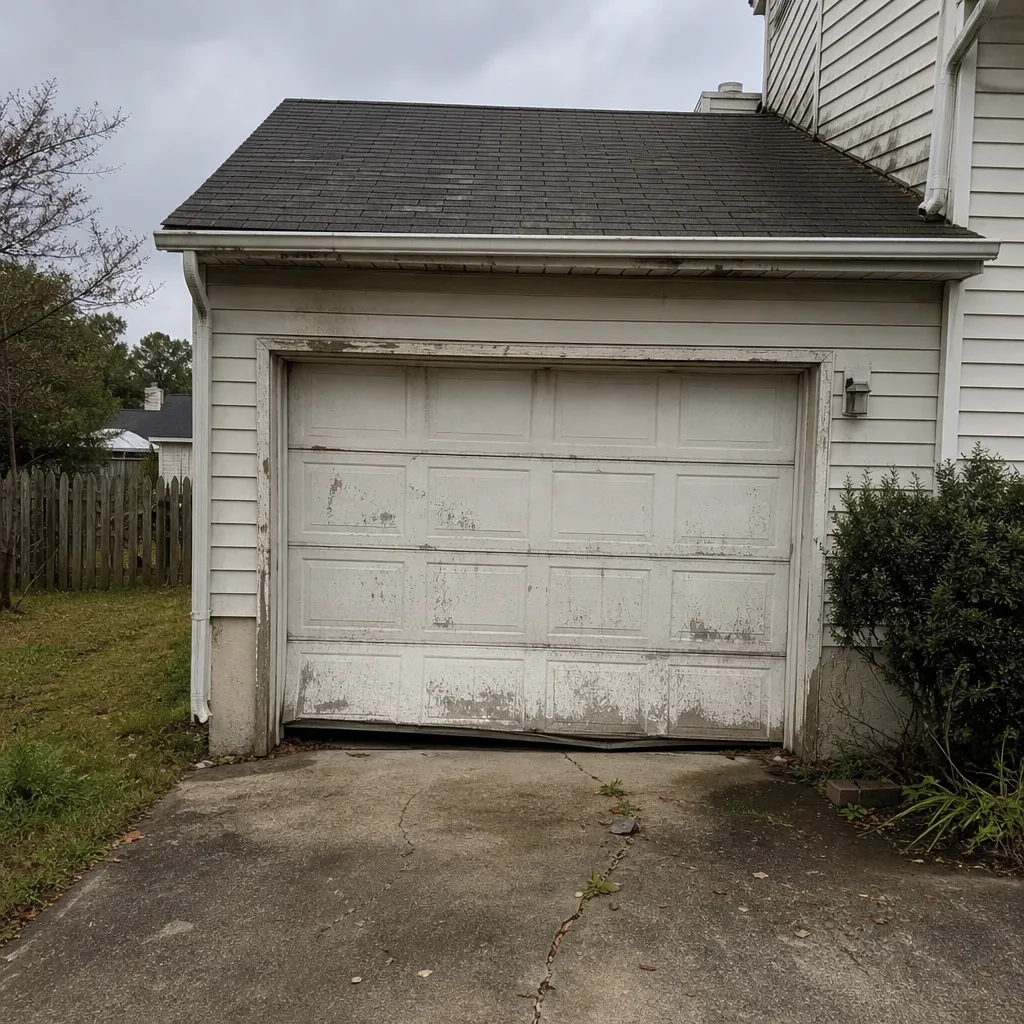 Before
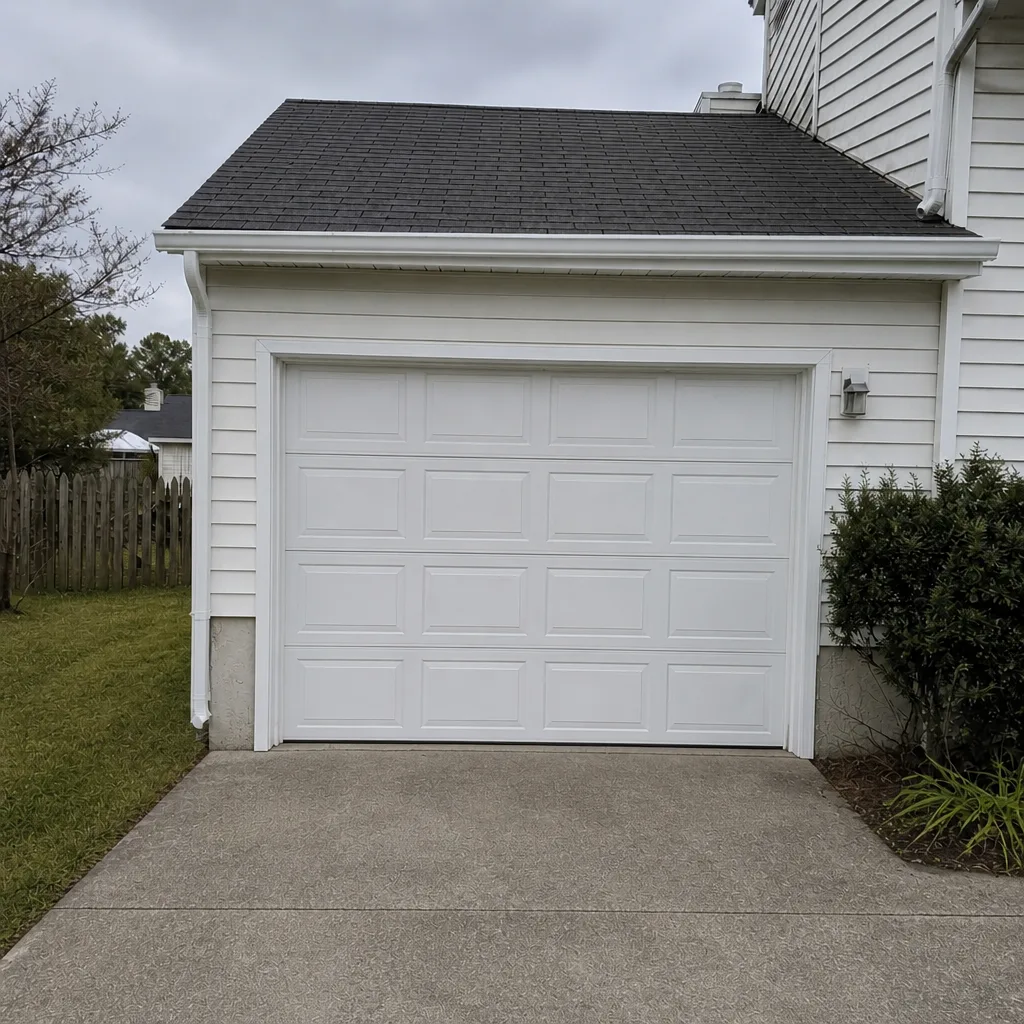 After
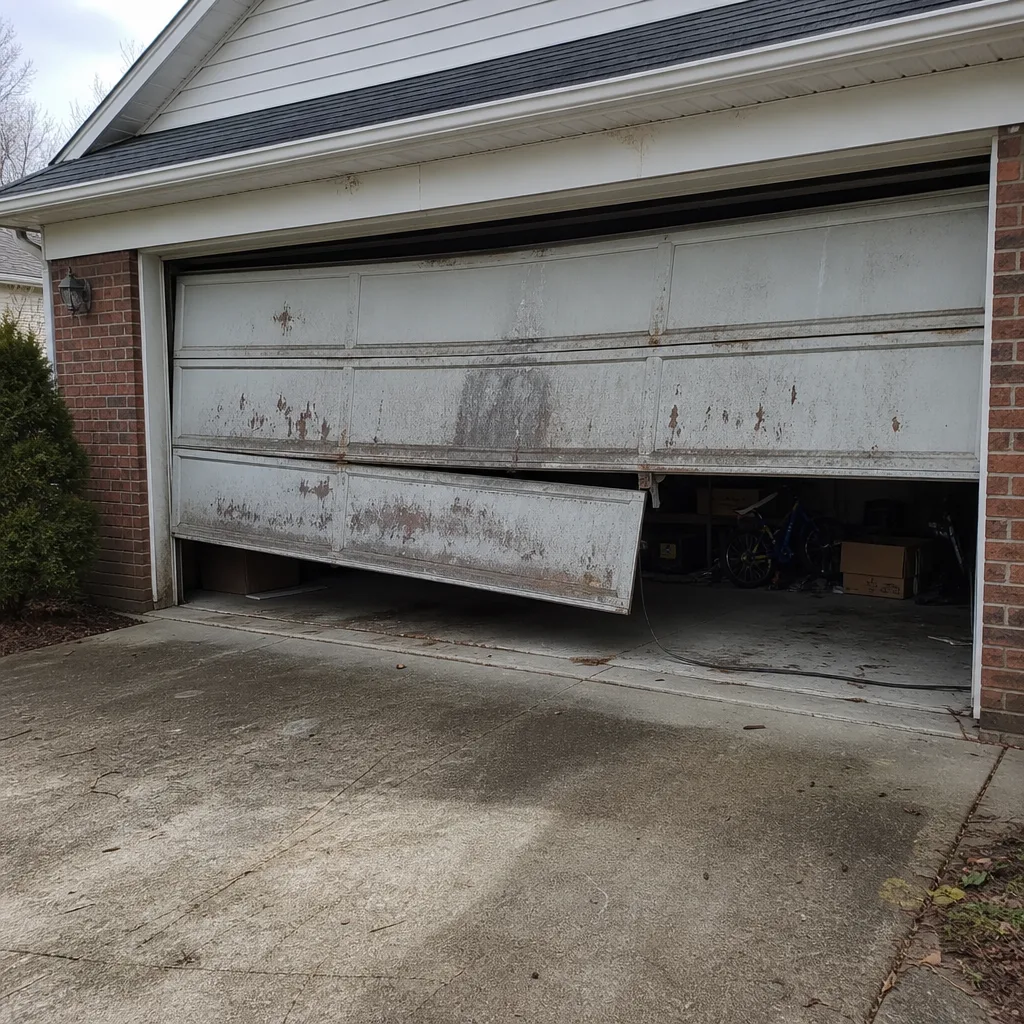 Before
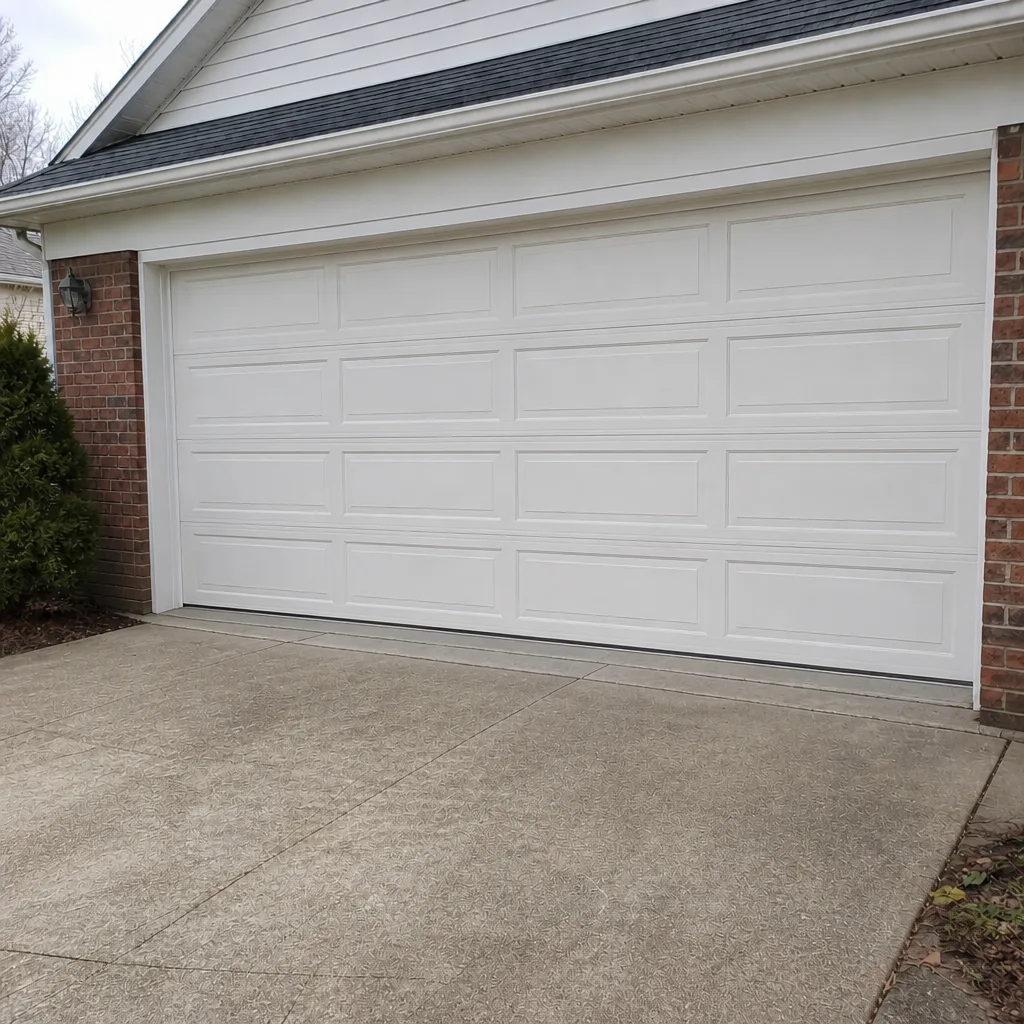 After
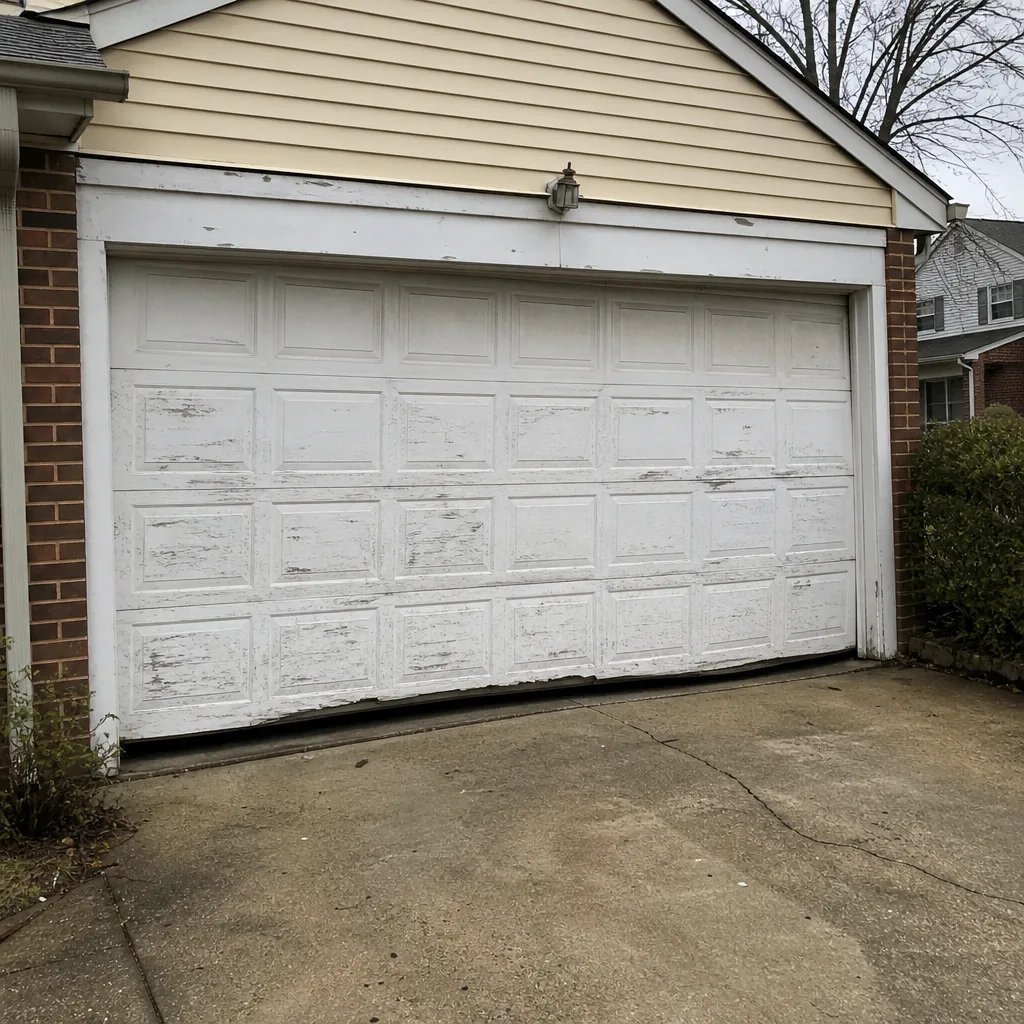 Before
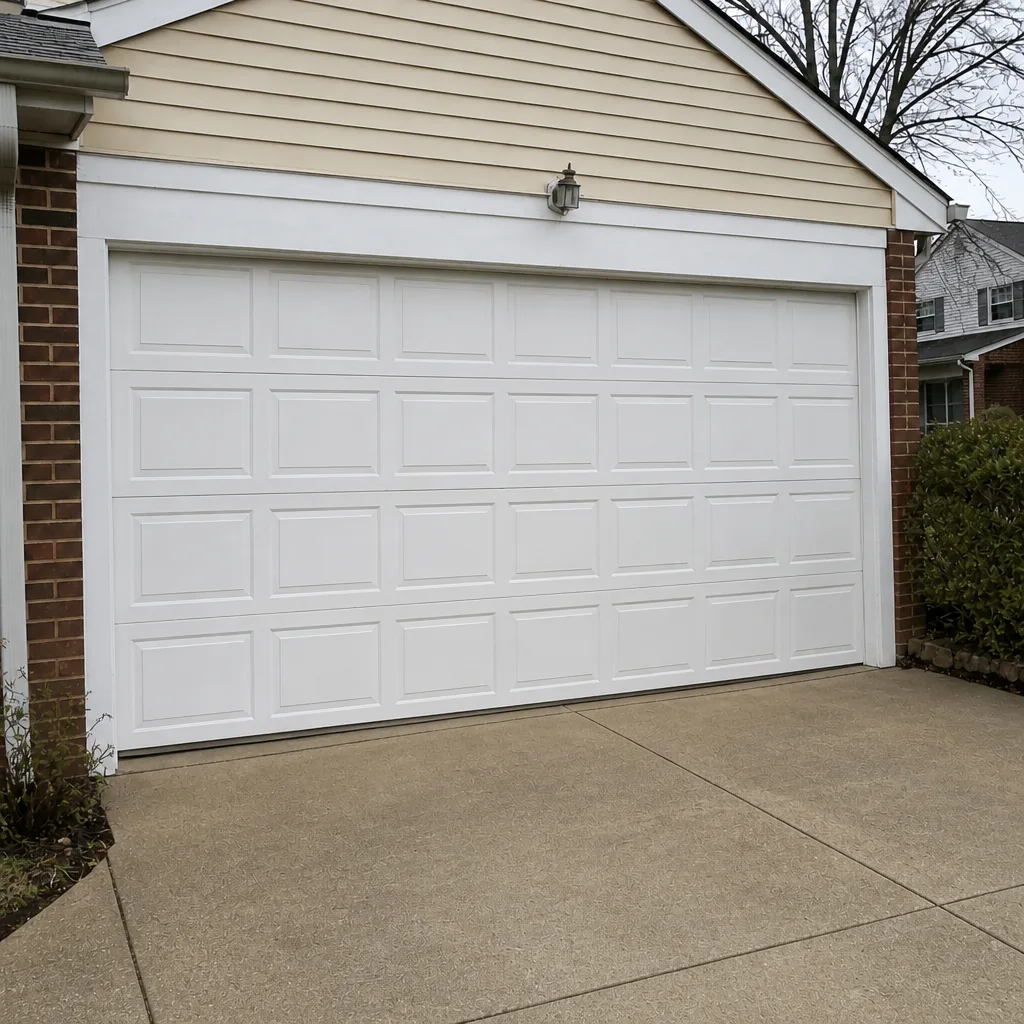 After
Common Mistakes to Avoid
- Lubricating the tracks. Tracks need to stay clean and dry. Lubricant collects grit and causes the door to bind, which is the opposite of what you’re trying to achieve.
- Raising the opener’s force limit to make a heavy door move. The force limit exists to protect the door and anyone under it. If the door is heavy, the balance is off, and the fix is the balance, not the setting.
- Ignoring spring season because nothing feels wrong. In Mechanicsville, freeze-thaw movement happens quietly. Gaps that look fine in March can be out of spec by May. Measure instead of eyeballing.
- Skipping the fall balance check. Fall is the highest-value window. A door that goes into winter balanced is the door that doesn’t break in January.
- Treating a TorqueMaster or enclosed spring like a standard torsion setup. These systems are enclosed for a reason. They load and adjust differently, and they need the right knowledge to service correctly.
- Forcing a frozen door open with the opener. The opener can’t break a door loose from ice without damage. Free it by hand first.
- Overlooking summer humidity as a cause of opener strain. The opener is usually the messenger, not the cause. When it strains in August, the door is often the problem.
When to Call a Professional
Call a professional if your door is binding, if the balance check fails, if you see a gap in a spring coil, if the opener reverses on its own, or if an opener acts strangely after a freeze-thaw event. Also call if the door is a TorqueMaster or another enclosed-spring system and you can’t tell whether the spring is in good shape. Those are the cases where a visual inspection by someone trained on that specific hardware saves you a real problem later.
You can book Mechanicsville Garage Door Repair Pros for a free estimate in Mechanicsville. Our technicians have up to 13 years of experience, and we work on the eight major brands: LiftMaster, Chamberlain, Genie, Clopay, Amarr, Wayne Dalton, Craftsman, and Raynor. Call (855) 600-1041.
Frequently Asked Questions
Twice a year is a good baseline: a full tuning in fall and a balance and visual inspection in spring. Doors over ten years old or with high cycle counts benefit from a once-yearly professional inspection on top of the two checks. The fall appointment is the priority because it prevents winter failures.
Yes. Fall is the highest-return window in Mechanicsville because it’s the last chance to correct balance and hardware before cold weather, and the summer panel expansion has settled by then. A door tuned in fall enters winter balanced. A door tuned in spring has to survive winter first. Call (855) 600-1041 to schedule a fall check.
Cold-thickened lubricant on the spring is the usual cause. When the spring can’t move freely, the opener carries the load it isn’t designed to carry. If the sound returns every cold morning and goes away as the day warms, that’s the pattern to mention when you call. It’s an opener repair symptom with a mechanical root, not an opener failure by itself.
Yes, and more than most people expect. Wood and composite panels swell in Virginia summer humidity, and the swelling adds resistance at the hinges and rollers. On a door that’s already near its balance limit, that added resistance runs the spring and opener harder all season. That’s why summer humidity shows up as a January spring failure.
Don’t try to operate the door, and don’t try to replace the spring yourself. Call a professional for spring repair. Springs are under high tension and require specific tools and procedures. In Mechanicsville, we handle torsion and extension spring work as a safety-critical specialty, and we’ll get you on the schedule. Call (855) 600-1041.
The mechanical schedule stays the same: fall tuning and spring inspection. What changes is the opener diagnostics. LiftMaster and Genie systems have brand-specific force limits, travel settings, and in the case of LiftMaster logic boards, specific moisture vulnerabilities. We diagnose by brand, not by assumption, which means we know what to check first on your specific unit.
The Bottom Line
Garage door maintenance in Mechanicsville works best when you treat the year as four phases instead of two. Spring is for measuring frame movement before it becomes a balance problem. Summer is for watching the opener’s effort as humidity adds resistance. Fall is the high-ROI window: balance, lubricate, tighten, and test. Winter is when accumulated stress shows up, from stiff grease to wet logic boards. Set your reminder in September and again in March. Check the balance yourself, leave the springs to a professional, and call (855) 600-1041 when anything looks off. Free estimates, and the price is quoted and agreed before any work starts.
Written by the team at Mechanicsville Garage Door Repair Pros.